
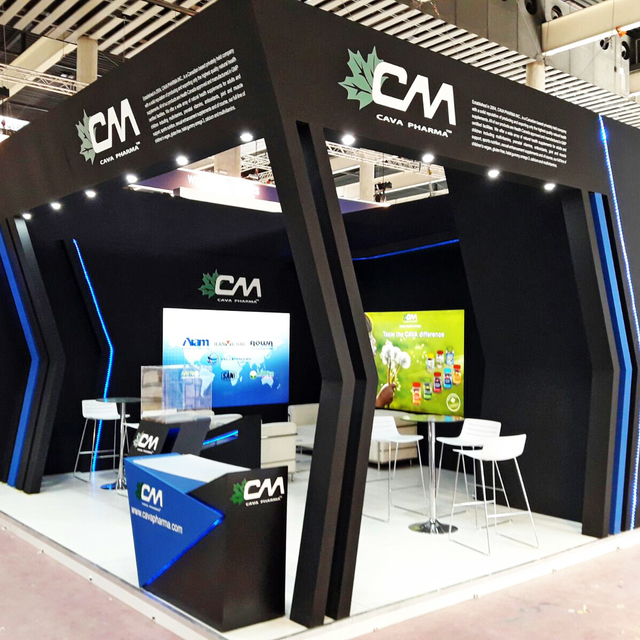
Strategic stand planning
Designing a successful stand starts long before thinking about colors and materials. Strategic planning is the basis of everything:
Define your objectives: What do you want to achieve at the fair? Generate leads? Close sales? Launch a product? Strengthen brand? The objectives determine the design.
Know your audience: Who will visit your booth? Technical decision makers? Buyers? Press? The visitor profile defines the tone and content of the stand.
Study the location: The position of the stand in the venue determines the design. A corner stand has 2 open faces, an island stand has 4. Take advantage of the visible faces and the natural flow of visitors.
Realistic budget: Define a budget that includes design, production, transportation, assembly, furniture rental, electricity, catering and staff.
Key elements of stand design
An effective stand combines several elements that work together to attract, inform and convert:
Height and visibility: The stand must be seen from a distance. Tall elements such as totems, elevated LED screens or aerial structures help you stand out from the crowd.
Professional lighting: Lighting is probably the element that has the most impact on the perception of the stand. Combines general, focal and decorative lighting. A well-lit stand attracts 50% more visitors.
Impressive graphics: Clear, short and visible messages. The visitor must understand what you do in 3 seconds. Use large, high-quality images.
Functional spaces: Reception area, product demonstration area, private meeting space and warehouse. Each area has its function and must be well defined.
Technology: Screens, tablets for lead registration, augmented reality, interactive demos. Well-integrated technology reinforces the image of innovation.
Modular stand vs custom stand
One of the most important decisions is choosing between a modular stand or a custom stand:
Modular stand:
- Reusable at multiple fairs
- Adaptable to different sizes of space
- Lower cost per fair (amortizable)
- Easily updateable graph
- Faster assembly and disassembly
- Ideal for companies that hold more than 3 fairs a year
Custom made stand:
- Unique and differentiating design
- Greater creative freedom
- Better adaptation to a specific space
- Greater visual impact
- Higher cost per fair
- Ideal for key fairs where you need to stand out the most
Hybrid solution: Many companies opt for a reusable modular structure with customized graphic elements for each fair. It is the option with the best cost-impact ratio.
Common mistakes in stand design
These are the most frequent mistakes that we see at fairs and that you should avoid:
1. Excess text: The stand is not a catalog. Short messages, big images.
2. Poor lighting: A poorly lit booth looks dull and unprofessional.
3. Lack of meeting space: Without a private space for business conversations, you lose business opportunities.
4. Not having trained staff: The best stand in the world does not work if the staff is not trained to serve the visitor.
5. Ignore storage: Boxes, bags and material stacked in plain sight destroy the image of the stand.
6. Do not measure results: If you do not count leads, meetings and contacts, you will not know if the investment was profitable.