
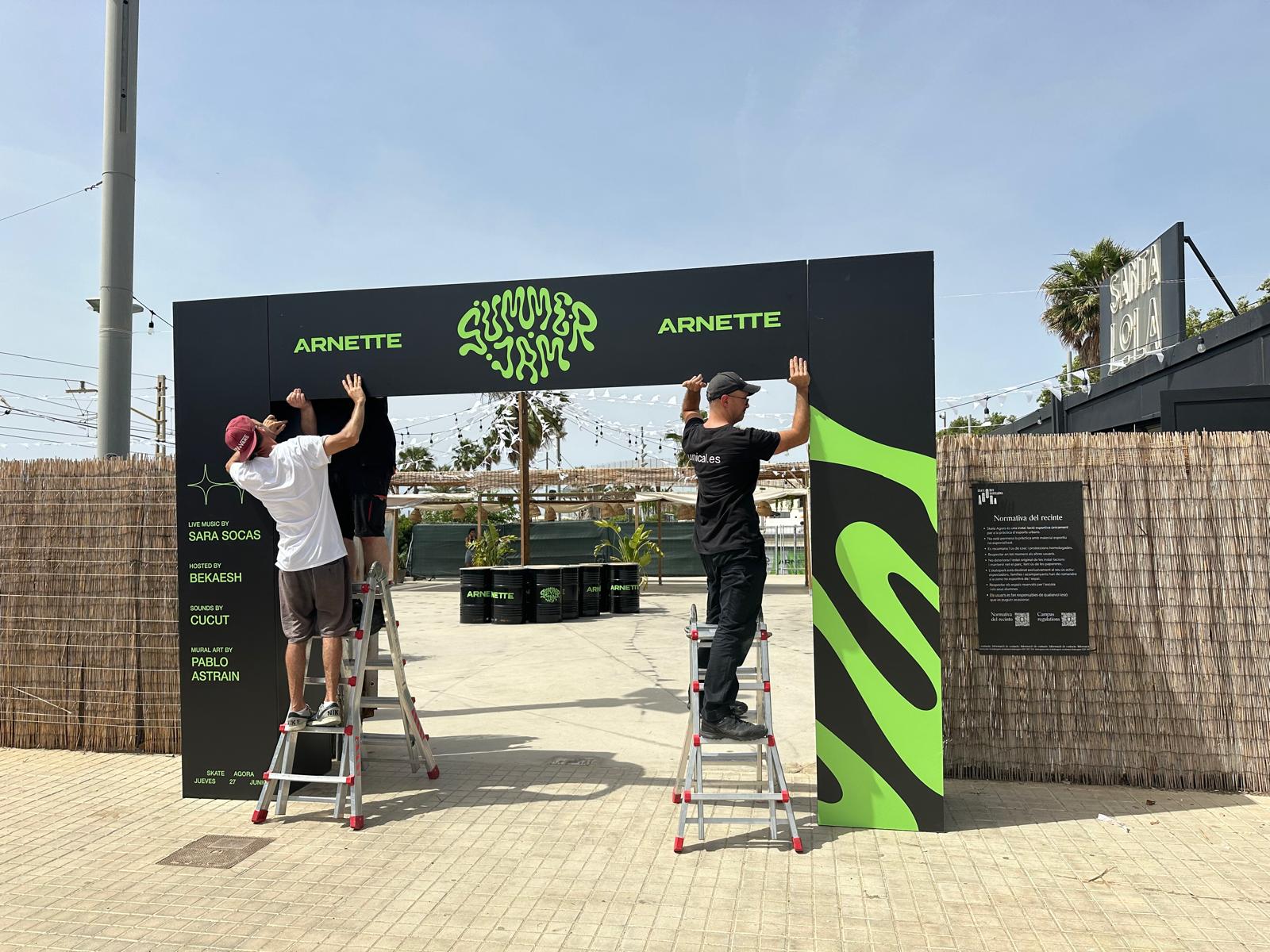
Types of advertising banners and their applications
Advertising banners are one of the most versatile and effective materials in the world of digital printing. Whether for a facade, an event, a fence or a trade fair stand, there is a specific type of canvas for each need. At Unical we have been working with all types of advertising banners for years and in this guide we explain what they are, what each one is for and how to choose the most appropriate one for your project.
What is an advertising banner?
An advertising canvas is a flexible material, generally made of PVC or polyester, on which any graphic design is printed with great quality and durability. It is mainly used outdoors, although it also has indoor applications, and stands out for its weather resistance, its large format and its relatively low cost compared to other supports.
Most used types of advertising banners
Solid canvas or standard banner
It is the most common type of canvas. It is made of laminated PVC, which gives it great resistance and opacity. It is ideal for banners, billboards, facades and any application where a sharp, long-lasting image is needed.
Main applications:
- Billboards
- Facades of commercial premises
- Banners for events and fairs
- Construction tarpaulins
Mesh canvas or mesh
The mesh canvas is perforated with thousands of small holes that allow air and light to pass through. This makes it perfect for large formats exposed to the wind, as it reduces resistance and prevents damage. If you want to know more about the differences between this type and solid canvas, check out our post on mesh canvas vs solid canvas.
Main applications:
- Facades of buildings under construction
- Fences in windy areas
- Large outdoor tarps
Textile canvas
Made from coated polyester, textile tarpaulin offers a softer, more elegant look than traditional PVC. It is widely used indoors and at high-level events where aesthetics are a priority.
Main applications:
- Premium fair stands
- Corporate events
- Interior decoration
- Photocalls and backdrops
Backlit Canvas
Specifically designed to be illuminated from behind, the backlit canvas transmits light evenly and offers very vivid and impressive colors. It is perfect for light boxes and mupis.
Main applications:
- Light boxes
- Advertising mupis
- Illuminated interior signage
- Stands with integrated lighting
Self-adhesive canvas
This type of canvas incorporates an adhesive on its back, which allows it to be glued directly to surfaces such as glass, walls or floors without the need for additional structures.
Main applications:
- Shop window decoration
- Floor vinyl
- Temporary signage on walls
How to choose the right type of tarp?
The choice depends on several factors:
- Location: exterior or interior
- Climatic conditions: windy areas require mesh canvas
- Aesthetics: if you are looking for maximum visual quality, opt for textile canvas or backlit
- Budget: Standard solid tarp is the most economical option
- Weight: the higher the weight, the greater resistance and durability. Consult our guide to canvas weights for more information.
Why choose Unical for your tarp project?
At Unical we have the machinery and experience necessary to print any type of advertising canvas with the highest quality. We work with leading brands in the sector and offer a complete service from design to installation.
Conclusion
Choosing the right type of canvas can make the difference between a mediocre result and a truly effective visual impact. If you have questions about what canvas you need for your project, our team is here to help.
Ready to take the next step? Request a no-obligation quote and we will advise you in a personalized way.
Frequently asked questions
Related articles
Tarps
Mesh canvas vs solid canvas: which one do you need?
Practical comparison between mesh canvas and solid canvas to choose with technical criteria.
TarpsGuide to canvas weights: what they mean and how to choose
Everything about canvas weights to make technical and profitable decisions.
VinylsTypes of vinyl and their applications: decorative, microperforated, reflective
Practical guide to choosing vinyl according to use, surface and duration.