
BlogInterior design
Vinyl coverings for hotels and restaurants: the alternative to traditional renovation
1 March 202612 min read
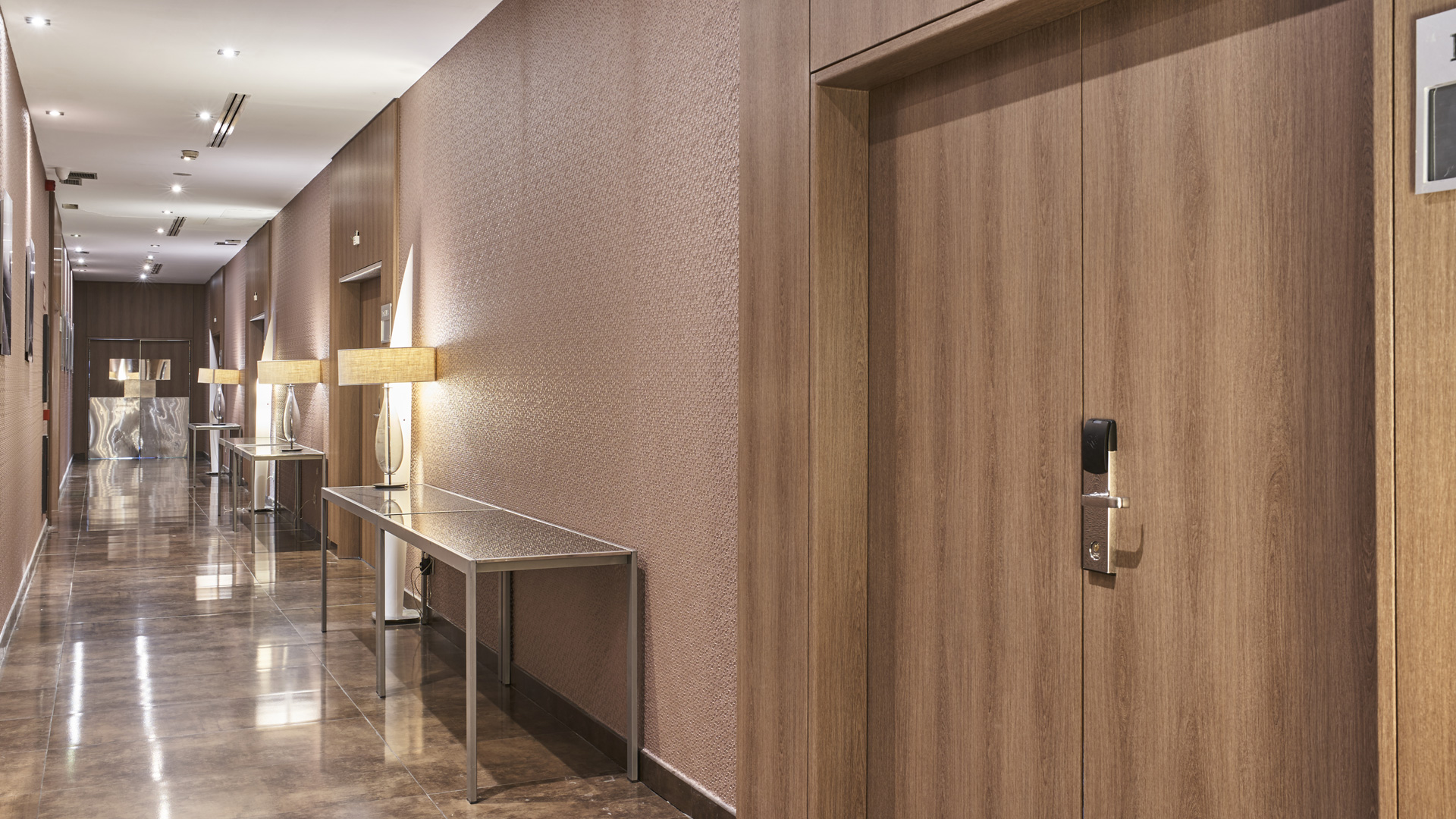
What are vinyl coverings?
Covering vinyls are high-strength adhesive sheets specifically designed to cover and transform surfaces such as walls, furniture, doors and architectural elements. Unlike conventional decorative vinyls, covering vinyls offer much greater durability and resistance, with a useful life of between 10 and 15 years indoors.
Market-leading brands, such as 3M DI-NOC, Cover Styl and Belbien, offer catalogs with more than 1,000 finishes that faithfully reproduce natural materials: wood, stone, marble, concrete, metal, leather and textiles. The key is that these vinyls incorporate real texture, that is, a surface relief that replicates the tactile sensation of the original material. The result is a surface that deceives both the eye and the touch.
Types of vinyl covering
There are different types of vinyl coverings depending on their finish and application:
Textured wood effect vinyl: They faithfully reproduce the grain, grain and texture of noble woods such as oak, walnut, teak and cherry. They are ideal for bed headboards in hotels, wall panels in restaurants and furniture coverings.
Stone and marble effect vinyls: They imitate Carrara marble, travertine, slate, granite and natural stone finishes. Perfect for receptions, bathrooms and communal areas where a luxurious look is desired without the cost or weight of real stone.
Cement and concrete effect vinyl: Very popular in industrial or contemporary style establishments. They offer the raw look of exposed concrete with the warmth and softness of vinyl.
Metallic and textile vinyls: Brushed aluminum finishes, stainless steel, oxidized copper or fabrics such as linen and silk. Ideal for decorative details and accent areas.
Waterproof vinyl for wet areas: Specifically designed for bathrooms, showers and kitchens. Resistant to water, steam and aggressive cleaning products.
Advantages over traditional work
Renovation with vinyl coverings offers decisive advantages for the hospitality sector:
1. No works or debris: Vinyls are applied directly to the existing surface (tiles, paint, plaster, wood). Nothing needs to be demolished, removed or rebuilt.
2. Speed of execution: An entire hotel room can be renovated in 1-2 days. An average restaurant in 3-5 days. Compared to the weeks or months of a traditional reform.
3. Reduced cost: The cost of a renovation with vinyl is between 50% and 70% lower than that of a conventional renovation, including materials and installation.
4. Without business interruption: You can work in phases, renovating floor by floor or area by area, without having to close the hotel or restaurant.
5. No noise or disturbances: The installation is quiet and clean. There are no hammers, drills or dust.
6. Durability: Quality architectural vinyls last 10-15 years with proper maintenance.
7. Sustainability: Less waste than a construction site, recyclable materials and a lower carbon footprint in the renovation process.
Acoustic panels: the perfect complement
Acoustic panels have become an essential element in the renovation of hotels and restaurants, and not just for aesthetics. The acoustics of a space have a direct impact on the customer experience.
In a restaurant, an excessive level of reverberation forces diners to raise their voices, which in turn increases the overall noise, creating a vicious cycle that degrades the dining experience. Acoustic panels break that cycle by absorbing sound and reducing reverberation by 40% to 70%.
In hotels, acoustic panels improve insulation between rooms, reduce noise in hallways and create more relaxed environments in common areas such as lobbies and living rooms.
Types of acoustic panels:
- Recycled felt panels: Eco-friendly, available in dozens of colors and shapes. They are installed on the wall and ceiling.
- Wood Slat Panels: Combine the aesthetics of natural wood with an acoustic absorbent foam core.
- Textile panels: With fireproof fabric and absorbent core. Elegant and functional.
- Custom panels: With digital printing, they can integrate images, patterns or the visual identity of the establishment.
Acoustic panels are not only functional: well designed, they become decorative elements that add character and personality to the space.
Applications in hotels and restaurants
In hotels: Headboards with textured vinyl, complete bathrooms with water-repellent vinyl, lobbies with premium finishes, hallways with acoustic panels and protective baseboards.
In restaurants: Acoustic panels to control noise, walls with vinyl that reinforce the gastronomic concept, kitchens with food grade vinyl, bars with impact-resistant finishes.
The versatility of these materials allows them to adapt to any style: from a minimalist boutique hotel to a rustic restaurant with traditional cuisine.
How much does it cost to renew with vinyl?
The cost depends on the surface and type of vinyl:
Hotel room (walls): €800 - €1,500
Hotel bathroom (full): €600 - €1,200
Medium lobby (80-120 m²): €4,000 - €8,000
Restaurant (100 m² room): €5,000 - €10,000
Acoustic panels (per m²): €80 - €200
Compared to a traditional renovation, the average savings is 50-70%, with the additional advantage of speed and zero interruptions.