
Printing
Printing on Dibond (aluminium composite): uses and advantages
What Dibond is and when it is worth printing on
Dibond is an aluminium composite panel: two thin aluminium sheets with a plastic core in between. It is rigid, flat, light for its strength and performs well outdoors. That is why it is the go-to substrate when a printed piece has to last: company plaques, fascia signs, outdoor wayfinding or panels exposed to sun and rain.
If your piece will be outside, has to look perfect for a long time or needs a completely flat surface, Dibond is usually the answer. If it is an indoor campaign lasting a few weeks, you are probably paying for more than you need.
Dibond is actually a trade name that has become a generic term, just like Forex. In the industry you will also see it called composite panel, aluminium composite or ACM. Here we are talking about the material in general. If you want to compare it with other substrates, see our Forex vs Dibond vs acrylic comparison.
How it is made and which thicknesses are used
The key to composite panel is its sandwich construction. The two aluminium faces provide rigidity and a smooth surface, usually lacquered white, that takes ink very well. The plastic core keeps the weight down and lets the panel be worked without bending or rippling.
In printing and signage, the most common thickness is 3 mm, which covers most plaques, signs and panels. Thinner panels are sometimes used for small indoor pieces, and for large formats or pieces exposed to wind a thicker panel or a frame behind it is worth considering.
As well as white, there are brushed aluminium, metallic and coloured lacquered finishes, which let you leave part of the metal visible and print over it. Before deciding, it is worth seeing a physical sample: the same design looks very different on white and on silver.
Indoors and outdoors: how it holds up over time
It is a material designed for outdoor use. It does not absorb water, does not swell, does not corrode in normal conditions and stays flat through temperature changes far better than foamed plastics. Indoors, it simply causes no problems.
What most affects lifespan is not so much the panel as the print and how it is protected. Unlaminated outdoor graphics fade sooner and scratch easily. With good UV laminate and suitable ink, the piece can stay in good condition for years, although the result depends on orientation, how much sun it gets and maintenance.
Two practical points for outdoor use:
- In large formats the panel expands and contracts with heat. Fixings need some tolerance, or the panel should be mounted on a frame.
- The edges are visible. For a cleaner finish they can be capped with a profile or the border can be folded.
Direct print or printed vinyl: how it is printed
There are two ways to get the graphic onto Dibond, and both are right depending on the job:
- Direct UV printing. The ink goes straight onto the panel. It is clean, efficient for runs and very good for plaques, signs and text-heavy pieces. It also allows white ink on brushed aluminium so that some areas stay metallic.
- Printed and laminated vinyl. The graphic is printed on vinyl, laminated and applied to the panel. It is common for demanding outdoor use, large formats and when the piece has to be folded or clad in 3D, because vinyl follows edges better.
Laminate, matt or gloss, protects against UV and scuffs. On pieces that will be photographed or lit by spotlights, matt avoids distracting reflections.
Finishes: cutting, routing, folding and mounting systems
Composite panel machines very well, which opens up plenty of options beyond the rectangle:
- Straight or contour cutting on a router, following the outline of the logo or piece.
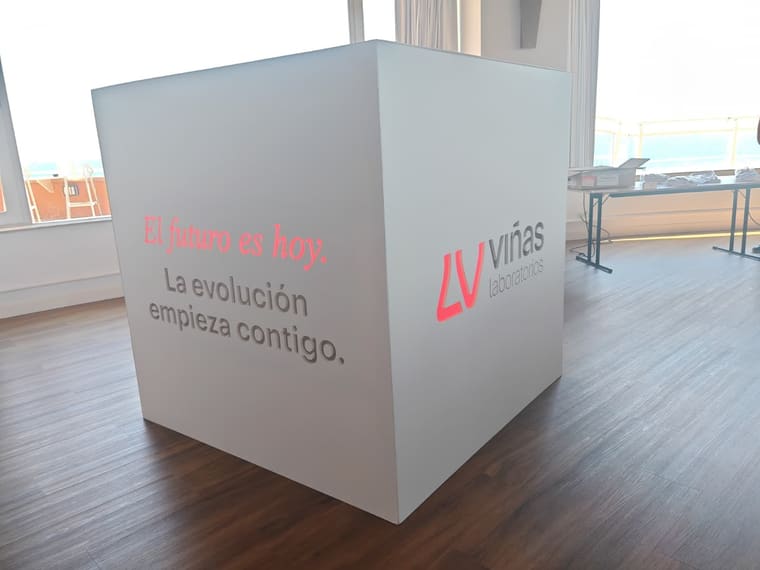
- V-groove routing and folding. The back of the panel is grooved without cutting through the front face, then folded. This is how boxes, cubes, sign trays and folded edges with no visible joins are made.
- Drilling and stand-offs. The classic solution for entrance plaques: the piece sits away from the wall on metal stand-offs.
- Rear frame or profile. For large panels, rigid photocalls or pieces that must stay flat outdoors.
- Double-sided tape or structural adhesive, when you do not want to drill the surface, always assessing the substrate and the load.
We handle all of this through our rigid substrate printing service, with installation included if you need it.
Typical uses, with real examples
Dibond makes most sense for permanent or semi-permanent pieces that need to look good close up and from a distance:
- Corporate plaques and building directories.
- Fascia signs, sign trays and backing panels for letters.
- Outdoor signage for entrances, car parks and industrial units. If you are planning a full system, our corporate signage guide may help.
- Display panels, rigid backdrops and cladding for structures.
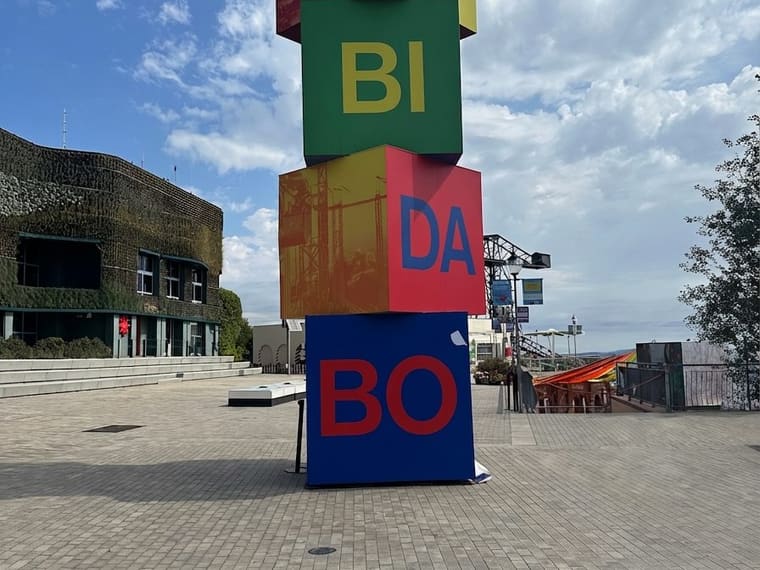
Some of our projects using composite: the large-format cubes for Parc d'Atraccions Tibidabo, clad in aluminium composite panels with printed vinyl and UV laminate to withstand the hilltop weather; the Venca pop-up store, with printed vinyl on composite panels; the Nunsys Group photocall, in a composite-type rigid panel on a rear frame with matt laminate; and the Dibond and Forex display panels for the pavilions we fitted out at Expo Zaragoza 2008.
When not to use Dibond and what to choose instead
Dibond is not the best option for everything. These are the cases where we usually recommend something else:
- Short indoor campaigns. If the piece will last a few weeks and never goes outside, foam PVC or Forex does the job just as well and is cheaper and lighter.
- Pieces that need transparency or depth. For receptions, premium plaques or displays, acrylic gives a finish aluminium cannot.
- Items that are transported and assembled many times at touring trade shows or events, where a knock on a corner dents the aluminium. Tensioned fabric or Forex with replaceable graphics can make more sense.
- Very large formats with no structure. Beyond a certain size a frame is needed; if one cannot be fitted, another solution such as a banner is better.
- Fire performance requirements. Façades, exhibition venues or public spaces may demand them. Specific versions of the material exist, but what is required depends on each regulation and each venue: check with the organiser or the local council, or ask us for advice.
If you are weighing up several substrates, our guide to types of rigid printing materials helps you sort out the criteria.
What to prepare before asking for a quote
To recommend the right panel and finish, it helps us to know:
- Where the piece goes: indoors or outdoors, orientation and height.
- Approximate size and quantity.
- How long it needs to last.
- How it will be fixed: stand-offs, frame, adhesive or its own structure.
- Whether you want the aluminium to show or a white surface, and whether the finish should be matt or gloss.
With that we can propose the material, thickness, print method and installation. We manufacture in Barcelona and install throughout Spain. Call us on +34 937 50 23 04 or request a quote.
Frequently asked questions
Are Dibond and aluminium composite the same thing?
What Dibond thickness is used for a plaque or sign?
Does Dibond hold up outdoors?
Is direct print or vinyl better?
Can Dibond be cut into shapes?
Related articles
Differences between forex, dibond and methacrylate: which one to choose?
Clear comparison between Forex, Dibond and methacrylate to choose the correct rigid support for each project.Read article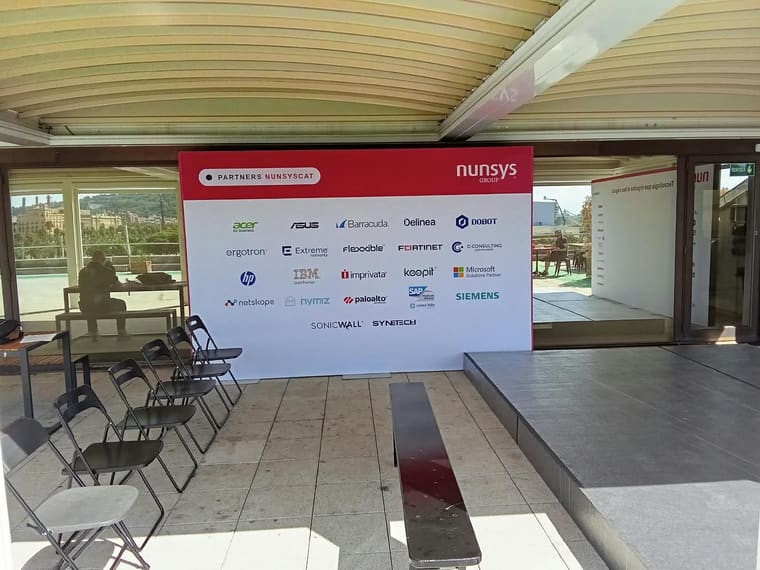
Types of rigid materials in printing: PVC, aluminum, forex and more
Practical guide to rigid materials in printing for companies and individuals: uses, advantages and real examples.Read article
Printing on foam PVC (Forex): what it is and what it is for
A practical guide to Forex: what it is, how it is printed, which finishes it takes and when it is the right choice for your signs, POS or indoor signage.Read article


Need this service?
Request a no-obligation quote.