Dimensional
letters
Laser cutting in steel, aluminium, acrylic, PVC and brass. We manufacture piece by piece at our workshop in Cabrera de Mar.
- Full-scale mounting template for exact positioning
- Fixing calculated for your wall surface
- Bespoke finishes: polished, satin, RAL powder-coated
Get a quote for your letters
We reply the same working day.
Request a quote No obligation · we reply todayLetters already
on a facade

HAVI
View project →
ALSA
View project →
Optima Retail
View project →
ASICS
View project →
Corolla Cross
View project →
Las Vegas
View project →
NTT Data
View project →
IVF Barcelona
View project →What built-up letters are and when they pay off
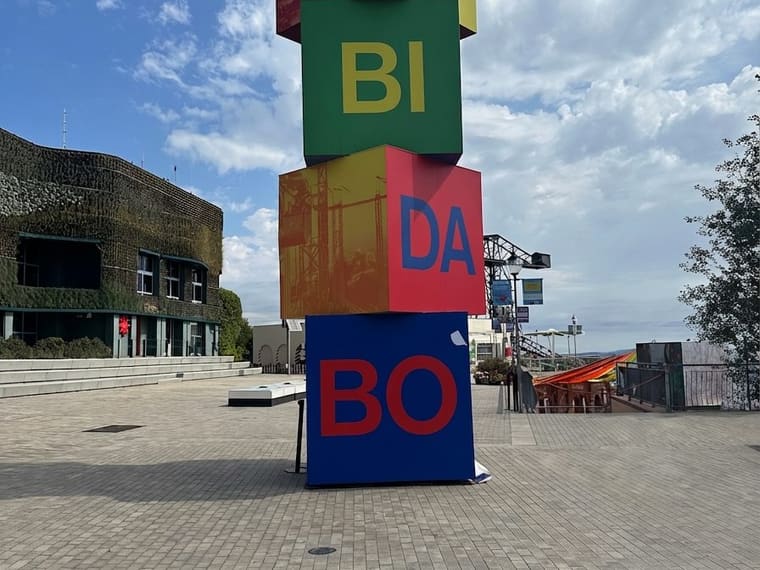
Built-up letters are three-dimensional letters, made one by one and fixed to a façade, a reception wall or a plate. Unlike vinyl or a printed panel, each letter has its own depth and edge, so the brand casts a shadow, changes with daylight and reads in relief. They are made in stainless steel, lacquered aluminium, acrylic, PVC or brass, and can sit flush on the wall, stand off on studs or carry LED lighting.
They pay off when the image has to look solid and last for years: office and warehouse façades, hotels, clinics, corporate receptions or high-end shops. If what you need is a quick change or a campaign with an end date, vinyl or a panel is usually more sensible, and we will tell you so.
Here we focus on the letter's material, finish and installation. If it has to read at night, the lighting systems (halo-lit, face-lit or LED neon) are covered in illuminated signs. For the rest of the façade and the shop window see commercial signage, and every option in Unical's signage services.
The material changes
the whole result
Dimensional letters are always the same idea, individual pieces fixed to the wall, but the material decides the price, the finish, the minimum thickness and how many years they withstand outdoors. These are the five families we cut.
Stainless steel
The most solid finish and the one that ages best outdoors. Laser cut with a hand-polished or satin edge. It's what practices, clinics and hotels choose when they want the brand to convey permanence. It doesn't rust, needs no maintenance and lasts decades.
Request a quote →Powder-coated aluminium
The most versatile option: light, cheaper than steel and available in any RAL colour. It can be finished matte, satin or gloss, and withstands the outdoors perfectly. It's the material we move the most volume of on commercial facades.
Request a quote →Acrylic
Solid colours, translucency and the option to backlight the letter from within. Widely used indoors, in reception areas and spaces looking for a clean, flat colour. It's cut with a flame-polished edge, which leaves a characteristic shine.
Request a quote →Expanded PVC
The entry-level choice and the standard solution for indoor and temporary signage. Lightweight, easy to install on almost any surface and very affordable in thicker gauges. Outdoors it has a limited lifespan, but indoors it performs more than adequately.
Request a quote →Brass and bronze
For premises after a classic or artisan character: old pharmacies, taverns, jewellers, listed buildings. Unlacquered brass evolves over time, gaining a patina, which in some projects is exactly what's wanted.
Request a quote →Combinations and letters on a backing panel
It isn't always a stand-alone letter. Sometimes the solution is a steel letter on an acrylic backing panel or on a lacquered panel, which simplifies fixing on irregular facades and provides a background that separates the brand from the wall.
Request a quote →Finishes, fixings
and workshop detail
With dimensional letters, the difference between a good job and a mediocre one isn't in the cutting, which anyone can do today, but in the edge finish, the fixing and the setting-out.
Laser for metal sheet and routing for thicker materials. The minimum stroke thickness depends on the material and the typeface: at the site visit we check your logo is manufacturable before committing to anything.
This is what sets a fine job apart from a rough one. We polish, satin-finish or lacquer the edge depending on the material, because it's the part of the letter seen at an angle from the street.
Fixing to brick isn't the same as to composite panel, glass or listed stone. We calculate the system for each case: spacers, blind bolts, structural adhesive or a concealed bracket.
When the letter stands off the wall it gains its own shadow and depth. The spacers are hidden and calculated so the gap is identical across every piece.
We make a full-scale template with the exact position of every letter and every drill hole. This is what guarantees the letter spacing on the wall matches what you approved on screen.
Oven-baked lacquer in any RAL colour, anodising, patinas and anti-graffiti treatments for exposed ground-floor areas.
How we work
From vector file
to letter on the wall
- Step 01
File and wall review
We check the logo can be manufactured in the chosen material and measure the surface where the letters will be fixed, which determines the fixing system.
- Step 02
Prototype and finish sample
If the project warrants it, we make a sample letter with the final finish. Seeing it in hand avoids surprises with the sheen, colour and edge.
- Step 03
Cutting and finishing in the workshop
Laser cutting or routing, folding where there's an edge, welding, edge polishing and coating. Every piece goes through inspection before being numbered and packed.
- Step 04
Setting-out and installation
We position the template, drill, fix piece by piece and check alignment and plumb with a laser level before removing the template.
Which letter material to choose
The five materials solve different things. This is the quick comparison we go through before bringing physical samples to the site visit.
| Material | Best for | Outdoors | Look | Relative cost |
|---|---|---|---|---|
| Stainless steel | Corporate façades, hotels, offices | Yes, maintenance-free | Brushed or mirror | High |
| Lacquered aluminium | Large façades, warehouses, brand colours | Yes | Any RAL colour | Medium |
| Acrylic | Receptions, interiors, lit letters | Yes, with a protected edge | Gloss, can be lit from inside | Medium |
| Foam PVC | Interiors, events, tight budgets | Sheltered only | Matt and light | Low |
| Brass and bronze | Hotels, offices, classic brands | Yes, lacquered or patinated | Warm, ages over time | Highest |
Outdoors, what fails most is not the letter but a fixing that does not suit the wall.
Send us your logo and a photo of the wall and we will recommend a material →How much built-up letters cost
We do not publish fixed rates because the price depends as much on the letters as on the wall they go on. We quote the whole job: manufacture, finish, installation and, if needed, lighting. These are the factors that move the figure:
Size and number of letters
Letter height and the number of pieces set the material used and the cutting hours.
Material and depth
Stainless, aluminium, acrylic, PVC or brass, and the edge you want seen from the street.
Finish
Brushed, mirror, RAL lacquer or patina change the workshop hours per piece.
Lighting
Unlit, halo-lit or face-lit: the LEDs, power supply and wiring add up.
Wall type and fixing
Concrete, brick, composite or glass each need different fixings and standoffs.
Access and equipment
Installation height and whether a lift platform or a street-occupation permit is needed.
Permits
On listed façades or in old town centres the council may ask for a photomontage and a report.
Google reviews
What our clients say
5,044 reviews on Google
5/5
Confiamos en Unical para rotular todo un edificio y fue todo un éxito. Muy buenos profesionales con un trato excelente. Experiencia de 10.
Gerard Duran egeaGoogle · Original review in Spanish
5/5
Los mejores profesionales del sector. Siempre que pedimos algo, lo hacen a la perfeccion y encima super eficientes. Tienen mucha vista y el asesoramiento es muy bueno. Sitio de confianza.
Pere Company RoigGoogle · Original review in Spanish
5/5
Profesionales con Mayúsculas! Muy contento por haber dado con ellos. El resultado es justo lo que buscaba, y con un tiempo de respuesta increíble.
GabrielGoogle · Original review in Spanish
We answer your questions
Everything people ask us before commissioning dimensional letters: timelines, licences, materials, installation and warranty.
Can't find your question?
Ask us directlyWhich material suits the facade of my business?
Can my logo be made as dimensional letters?
How are they fixed to the wall, and is the fixing visible?
How thick are the letters, and is it noticeable from the street?
Can the letters be illuminated?
What maintenance do they need?
How long does it take from design approval?
Can you install on protected facades or in historic centres?
What's the minimum number of letters you'll make? Can single pieces be ordered?
What's the difference from a tray sign?
Request your quote
Give your name real depth
No-obligation site visit anywhere in Catalonia. Physical material and finish samples if you need them.