Illuminated signs
So you're seen at night too
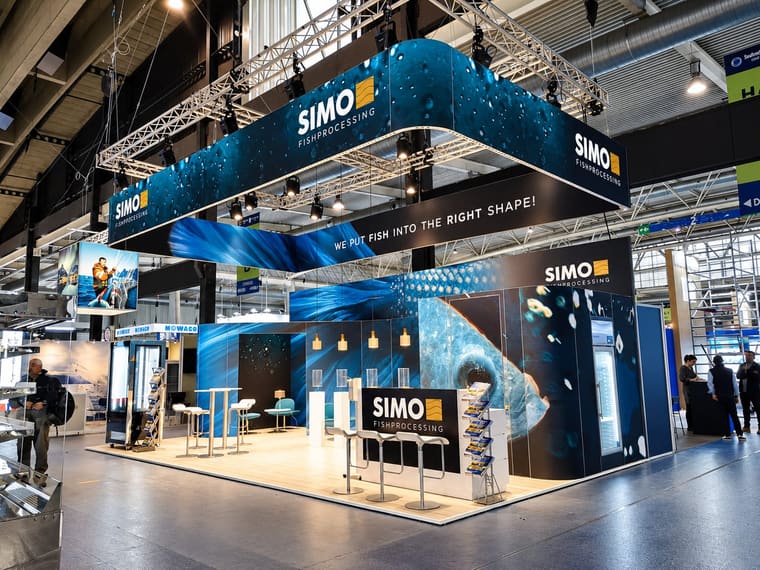
Light boxes, back-lit letters, LED neon and channel letters. Photometric design, manufacturing and installation with our own team.
- Day and night simulation before manufacturing
- Electrical certificate and installation certificate
- Accessible driver for maintenance
Get a price for your sign
We reply the same working day.
Request a quote No obligation · we reply todaySigns already lighting up
a façade


What an illuminated sign is and when it's worth it
An illuminated sign is a sign with built-in lighting, nowadays almost always LED, that keeps the brand legible when the light fades. The light can come from the whole surface, as in a light box; from the face of each letter, as in channel letters; from behind the letter, casting a halo onto the wall, as in back-lit letters; or from a flexible tube that reproduces the look of classic neon without gas or high voltage.
It's worth it when the business opens or is visible at night, when the street is dark or full of premises in a row, and when the sign needs to be read from a distance or from a car. If your premises close in daylight and the façade is already well lit, an unlit sign is usually enough, and in that case we'll tell you: you'll find it on our page for commercial signage for façades and shop windows.
Here we focus on the lighting system: which one to choose, what's inside it and how it's processed. If what you're after is individual raised letters, with or without light, the materials and finishes are covered in 3D letters for façades and receptions. And if you want to see the rest of our solutions, take a look at Unical's full range of signage services.
Every system lights up
in its own way
The difference between an illuminated sign that reads at a hundred metres and one that looks patchy lies in the lighting system and how it's calculated. These are the systems we manufacture, with how they actually behave at night.
The most common system and the most cost-effective per square metre. An aluminium structure with an acrylic or translucent tarpaulin front lit from inside with LED modules. It lights the whole surface evenly and lets you change the graphics without touching the structure.
Quote for a light box →The light doesn't come from the front but from behind the letter, projecting onto the façade like a halo. It's the most elegant system and the one that works best in offices, clinics and high-end retail, because at night the brand floats over the wall.
See back-lit 3D letters →Each letter is an independent box with a lit, translucent front. Maximum legibility from a distance because each character emits its own light, without relying on a background. The standard in shopping centres and large façades.
See front-lit 3D letters →The look of classic neon with a silicone tube and LED inside: no gas, no high voltage, minimal power consumption and no risk of breakage. It allows tight curves and handwritten-style signatures, and is the usual choice for hospitality interiors.
Quote for LED neon →Perpendicular to the façade and lit on both faces. When the street is narrow or there are many premises in a row, it's the only thing that gets you noticed before someone is right in front of the door.
Quote for a projecting sign →What's inside
a sign that lasts
An illuminated sign is two things: optics and electronics. If either one is cheap, it shows within a year as dark patches, blotches of light or flickering.
Branded LED modules
Modules with their own lens and heat sink, not generic strips. They keep luminous flux above 80% at 50,000 hours and don't yellow.
Drivers with power headroom
We size the power supply above the actual consumption. A driver running at its limit is the number one cause of faults in the second year.
Opal acrylic
Diffuses the light and hides the LED points. The thickness and level of opacity are calculated according to the box's depth, which is what prevents the blotchy effect.
Aluminium and lacquered steel
The structure and frame. Aluminium profiles for boxes and trays, and lacquered steel on parts that need to withstand wind or vandalism.
Translucent vinyls
Vinyls specific to back-lighting: they let light through in a controlled way and keep their colour at night, something a normal vinyl doesn't do.
IP65 watertightness
Gaskets, cable glands and drainage on every outdoor part. Water pooling inside a light box is what wrecks the electronics.
How we work
From light calculation to
sign switched on
- Step 01
Site visit and light study
We measure the façade, check the available electrical supply and assess the street's ambient light, which determines how much power the sign needs to be legible.
- Step 02
Design and night simulation
You receive the photomontage in two versions, day and night, over an actual photo of your façade. It's the only way to decide the lighting system with confidence.
- Step 03
Manufacturing and lit test
We assemble it in the workshop and leave the sign switched on for several hours before it leaves, checking light uniformity, driver temperature and watertightness.
- Step 04
Installation and certificate
Installation with our own team, connection to the supply, and delivery of the electrical installation certificate that the town hall or your insurer may request.
Which lighting system to choose
The six systems solve different problems. This is the quick comparison we run through with every client before moving on to the night simulation over their façade.
| System | Ideal use | Reading distance | Graphic change | Relative cost |
|---|---|---|---|---|
| Light box | High-street retail, franchises, frequent rebrands | Good | Yes, just the front | Low per m² |
| Back-lit letters | Offices, clinics, hotels, high-end retail | Medium | No | Medium-high |
| Front-lit channel letters | Shopping centres, large façades, roadside | Maximum | No | Medium-high |
| Front-lit + halo | Brand image that needs to stand out day and night | Maximum | No | The highest |
| Flexible LED neon | Hospitality interiors, handwritten signatures, shop windows | Short, indoors | No | Low-medium |
| Illuminated projecting sign | Narrow streets and premises in a row | Good perpendicular | Yes, in box format | Low |
If you're torn between two systems, the usual approach is to decide by seeing both simulated at night over a photo of your façade.
Send us a photo of your façade and we'll tell you which system fits →How much an illuminated sign costs
We don't publish fixed rates because with an illuminated sign the price depends as much on the façade as on the sign itself. We quote each sign as a whole: manufacturing, electronics, installation and documentation, after seeing where it's going. These are the factors that move the figure:
Surface area and system
Lighting a box from inside doesn't cost the same as manufacturing each letter as a piece with its own light.
Type of front
Opal acrylic, translucent tarpaulin or back-lit vinyl, depending on the box's depth and the finish you're after.
Structure and fixings
Façade-mounted, perpendicular projecting sign or a custom bracket, and the type of wall it needs to be fixed to.
Access and equipment
The mounting height and whether a lifting platform or public-road occupation is needed.
Electrical installation
Whether the previous sign's line can be reused or a dedicated line has to be run from the distribution board.
Council processing
Technical report and night photomontage, which tend to be more demanding in historic centres or protected buildings.
Switching control
Astronomical timer, twilight sensor or double-sided lighting on projecting signs.
Google reviews
What our clients say
5,044 reviews on Google
5/5
Confiamos en Unical para rotular todo un edificio y fue todo un éxito. Muy buenos profesionales con un trato excelente. Experiencia de 10.
Gerard Duran egeaGoogle · Original review in Spanish
5/5
Los mejores profesionales del sector. Siempre que pedimos algo, lo hacen a la perfeccion y encima super eficientes. Tienen mucha vista y el asesoramiento es muy bueno. Sitio de confianza.
Pere Company RoigGoogle · Original review in Spanish
5/5
Profesionales con Mayúsculas! Muy contento por haber dado con ellos. El resultado es justo lo que buscaba, y con un tiempo de respuesta increíble.
GabrielGoogle · Original review in Spanish
We answer your questions
Everything people ask us before ordering illuminated signs: timelines, licences, materials, installation and warranty.
Can't find your question?
Ask us directlyDo you manufacture in-house, or do you subcontract?
How much does an LED illuminated sign consume per month?
What's the difference between back-lit and front-lit?
Do I need a special licence because it's an illuminated sign?
Can it be repaired if a part blows?
How long does the lighting last before losing brightness?
Can I change just the graphics without changing the sign?
How long does an illuminated sign take once I approve it?
Do I need a new electrical supply line?
Can switching on and off be scheduled?
What warranty do illuminated signs come with?
Request your quote
Make your sign readable from a hundred metres
We manufacture in Barcelona and install throughout Spain. A lighting study is included in the quote.