
Fleet vehicle wraps
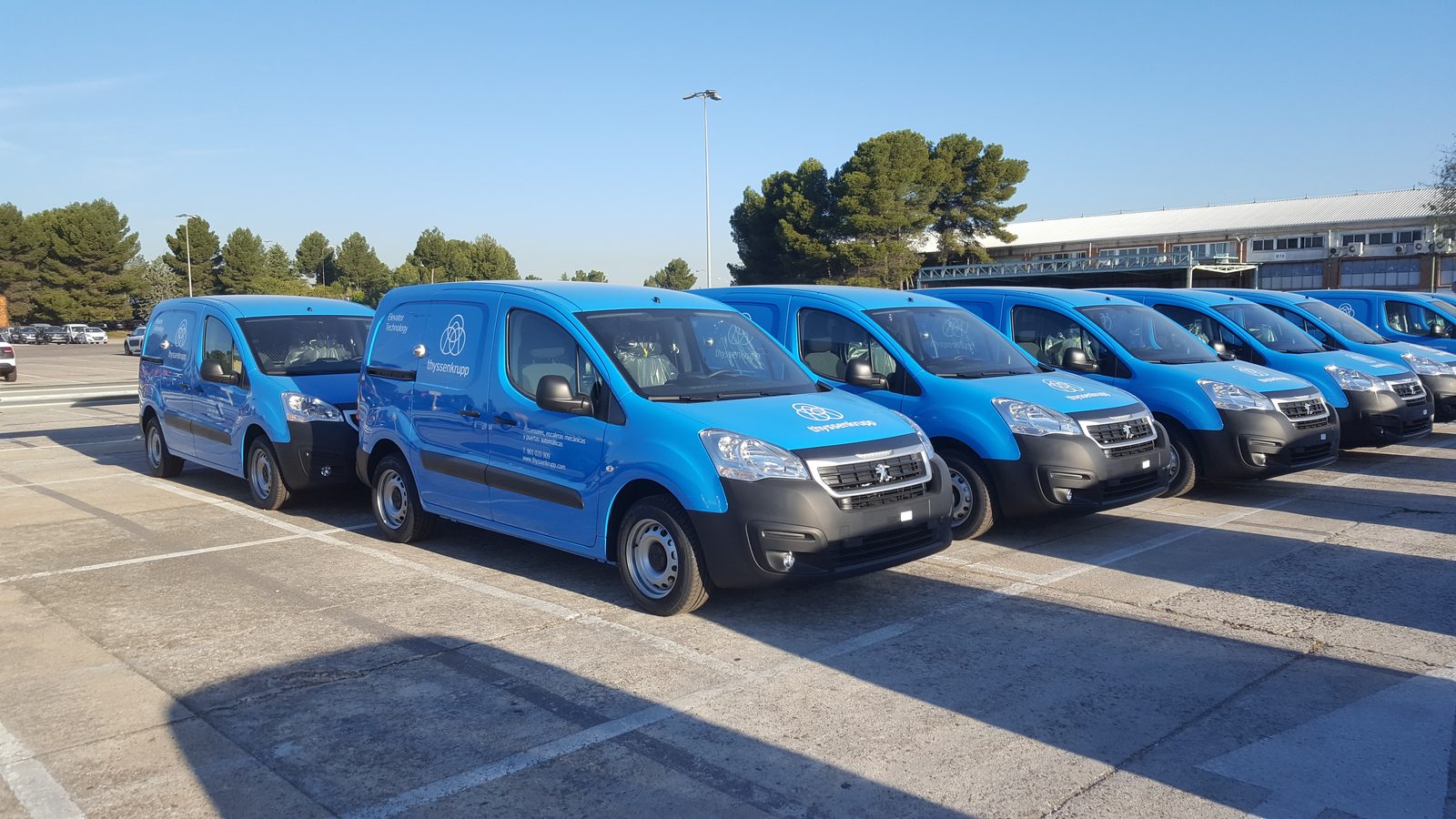
Two hundred vehicles,
a single image
From five units to nationwide fleets. Fleet manual, entry schedule and a single point of contact for the whole rollout.
- Pilot vehicle validated before the series is produced
- Schedule that respects your operations
- Identical replacements years later
Tell us about your fleet
We reply the same working day.
Request a quote for my fleet No obligation · we reply todayFleets already
on the road


What fleet livery is and when it pays off
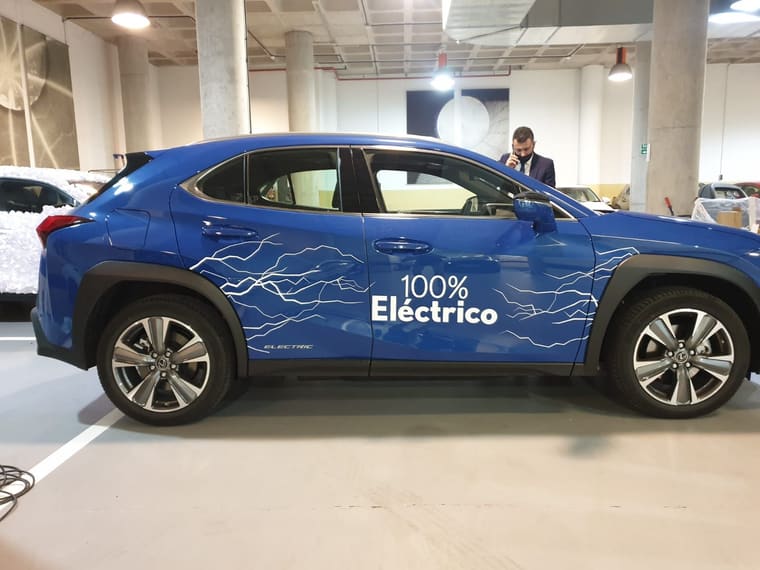
Fleet livery means wrapping every vehicle in a company with the same design, documented once and applied identically to each unit, regardless of the model, branch or year it enters the fleet. The difference from wrapping cars one at a time isn't the vinyl, it's the method: a fleet manual with the design adapted to each bodywork type, a pilot vehicle validated before the series is produced, material from the same batch for the whole rollout, and an entry schedule in stages that doesn't disrupt your operations.
It pays off from around five units, and especially when the fleet mixes different models, is spread across several branches, or is renewed gradually. Without a method, in those cases every vehicle ends up as a reinterpretation of the last one and the fleet ends up looking like it belongs to three different companies. If you only need to wrap one or two vehicles, or want to see what coverage types exist for each body type, we cover that on the vehicle graphics for businesses page. And if, alongside your vehicles, you're also planning to refresh the image of your premises, the rest of our services are on signage for businesses in Barcelona.
Five isn't the same
as two hundred
What changes between a small fleet and a nationwide rollout isn't the vinyl, it's the logistics: how entries are organised, who signs off, how you guarantee unit 120 is identical to unit 1. These are the scenarios we manage.
The step up from wrapping individual vehicles. What matters here is setting the design once and applying it identically to every vehicle, even across different models. It's done in two to three weeks, with two or three vehicles coming in per day.
Quote for a small fleet →Already needs a fleet manual and a schedule. We work in weekly stages agreed with your logistics manager, so you never have more than two or three units off the road at once.
Quote for a medium fleet →Phased rollout, usually grouped by branch or model. Includes a pilot vehicle, a finalised manual, vinyl batch control, and a single project manager throughout the whole rollout.
Quote for a large fleet →When the vehicles can't travel to Barcelona. We send our own team out by geographic area, with the same material and the same standard at every branch, so the unit in Seville is identical to the one in Girona.
Quote for a nationwide rollout →Fleets aren't renewed all at once. We keep the manual and templates so every new vehicle joining over the coming years comes out exactly like the first ones, without rediscussing the design.
Quote for new intake →End of contract or rebrand: heat removal of the vinyl, adhesive clean-up and handover of the vehicle ready to return or resell, with no damage penalties.
Quote for lease-return removal →How we guarantee
every unit matches
In a fleet the enemy isn't one-off quality, it's drift: small differences between vehicles that, after a hundred units, make the fleet look like it belongs to three different companies.
Fleet manual
A document with the design applied to every model in your fleet, with measurements and positions. It's what stops each vehicle being interpreted differently.
Pilot vehicle
Before producing the series, we wrap one unit and validate it with you in person. Any adjustment is free on the pilot and very expensive on unit 80.
Vinyl batch control
We reserve material from the same production batch for the entire rollout. Different batches can have colour variations that are imperceptible alone but obvious once two vehicles are parked side by side.
Templates for each model
A mixed fleet with four different models means four templates. We adapt the design to each body type so the perception stays the same even when the vehicle doesn't.
Entry schedule
Planning agreed with your operations, with vehicles coming in in stages so activity doesn't suffer. We hit the date for each stage, not just an overall deadline.
Record-keeping and traceability
We record which material, which batch and which date apply to every unit. If a side panel needs replacing three years later, it comes out identical.
How we work
From pilot vehicle
to the last unit
- Step 01
Fleet study
We take stock of models, ages and condition for every vehicle. From that we work out how many templates are needed and propose a schedule and price per unit.
- Step 02
Manual and pilot vehicle
We finalise the design applied to each model and wrap one real vehicle. It's validated in person, not on screen, and that's where the final manual comes from.
- Step 03
Production in stages
We print using material from the same batch and work in agreed stages, so you never have more vehicles off the road than you can afford.
- Step 04
Delivery, records and replacements
Every unit is checked and logged. We keep the manual, templates and batch on file so new intakes in the coming years come out identical.
Which coverage level to choose for the whole fleet
In a fleet, coverage is decided once and applied to every vehicle, so it's worth choosing with the whole fleet in mind: how much it costs multiplied across every unit, how a panel is replaced after a knock, and what happens when leased vehicles are returned.
| Coverage | Ideal fleet use | Durability | Relative cost per unit |
|---|---|---|---|
| Partial · logo and contact details | Large or mixed fleets where cost per unit and fast panel replacement matter most | 5 to 10 years | Low |
| Semi-full wrap · sides and rear | Delivery and service fleets after visible brand presence without covering the whole vehicle | 5 to 10 years | Medium |
| Full wrap · entire body | Small, highly visible fleets, where each vehicle acts as an advertising surface | 5 to 10 years | High |
| Removable vinyl · lease | Leased vehicles that must be returned mark-free at the end of the contract | 2 to 3 years | Depends on coverage |
Full detail on each coverage type and materials by body type is on types of vehicle graphics. We work with vinyls from manufacturers such as 3M, Avery or Oracal [PENDING: confirm the brands and ranges used for fleets].
How we work out the quote for a fleet
No two fleets are the same, so we don't work with fixed rates: the price is set per vehicle and per model, once we know your fleet. Each model has its own template and its own cost, and the total is the sum of the units.
The fleet study, the manual and the pilot vehicle are quoted separately, up front, because they're the work that makes everything else go smoothly. The series is invoiced as stages are completed, not all up front, so the spend is spread across the rollout and you can adjust the pace if your operations change.
- Number of units and how many come in per stage.
- Different models in the fleet: each one is a template.
- Surface covered per vehicle: partial, semi-full wrap or full wrap.
- Type of vinyl: permanent or removable for leased vehicles.
- Where it's applied: at our workshop or by sending our team to your branches.
- Removal of previous livery, if the vehicles already carry another image.
- Reserve material from the same batch for future replacements.
Google reviews
What our clients say
5,044 reviews on Google
5/5
Confiamos en Unical para rotular todo un edificio y fue todo un éxito. Muy buenos profesionales con un trato excelente. Experiencia de 10.
Gerard Duran egeaGoogle · Original review in Spanish
5/5
Los mejores profesionales del sector. Siempre que pedimos algo, lo hacen a la perfeccion y encima super eficientes. Tienen mucha vista y el asesoramiento es muy bueno. Sitio de confianza.
Pere Company RoigGoogle · Original review in Spanish
5/5
Profesionales con Mayúsculas! Muy contento por haber dado con ellos. El resultado es justo lo que buscaba, y con un tiempo de respuesta increíble.
GabrielGoogle · Original review in Spanish
Frequently asked questions about fleet livery
Everything people ask us before commissioning fleet livery: timelines, uniformity across vehicles, branches, leasing and billing.
Can't find your question?
Ask us directlyFrom how many vehicles does it pay to treat it as a fleet?
Do I have to stop the fleet during the rollout?
How do you guarantee every vehicle comes out the same?
My fleet has different models — can the image be unified?
Can you travel to our branches?
What happens when I bring in new vehicles in two years' time?
What if a vehicle is in an accident and a side panel needs replacing?
How long does it take to roll out a fleet of fifty vehicles?
Do you work with leased fleets?
How is a large rollout invoiced?
Do you manufacture in-house or subcontract?
Request your quote
Make your vehicles look the same
Send us your fleet and we'll put together a no-obligation proposal: entry schedule and a per-unit price for each model.